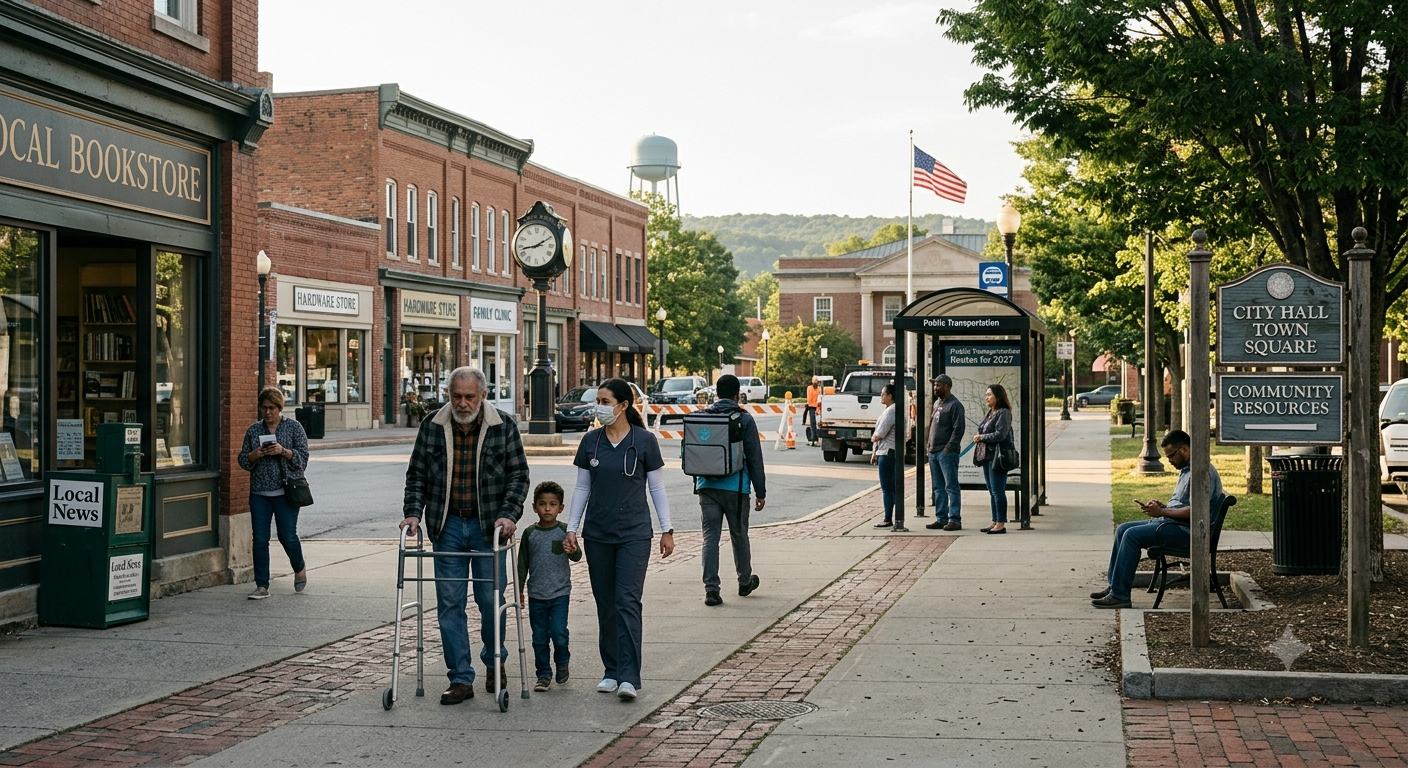
As the United States moves toward 2027, the nation stands at a critical juncture defined by economic transitions, technological acceleration, and evolving policy landscapes. The choices made by households, businesses, and policymakers over the coming years will set the trajectory for the remainder of the decade.
Understanding the primary challenges facing the country requires examining a complex web of interconnected factors. From the everyday financial realities of American families to national debates over immigration, healthcare, and artificial intelligence, structural shifts are reshaping daily life. This analysis explores the core issues shaping the nation’s future, grounding projections in current data, policy developments, and expert analysis.
Table of Contents
The U.S. Economy and Cost of Living
Economic stability remains a central focus for consumers and policymakers alike. While overall economic growth has demonstrated resilience following post-pandemic supply shocks, persistent cost-of-living concerns continue to weigh heavily on household budgets.
Inflationary Pressures and Purchasing Power
While core inflation has moderated from its multi-decade highs, the cumulative effect of price increases over recent years continues to affect consumer sentiment. Essential expenses—such as groceries, transportation, utility bills, and consumer insurance—remain elevated relative to pre-pandemic baselines.
For middle- and lower-income households, price sensitivity remains acute. Although real earnings growth has periodically outpaced inflation in specific sectors, many families report feeling that their purchasing power has not fully recovered.
Interest Rates and Monetary Policy
The Federal Reserve’s management of benchmark interest rates remains pivotal. Higher interest rates were implemented to cool inflation, but they have also raised borrowing costs across the economy. Mortgages, auto loans, and credit card debt have become significantly more expensive to service.
Economists and market analysts closely monitor how interest rate adjustments balancing growth and inflation will influence economic trajectory toward 2027, particularly regarding consumer debt levels and business capital investment.
Housing Affordability and the Rental Market
Housing accessibility has emerged as one of the most pressing socio-economic issues nationwide, characterized by inventory shortages, elevated home prices, and high rental costs.
The Homebuying Market Lock-In
The residential real estate market faces a structural supply imbalance. Millions of existing homeowners who secured sub-4% mortgage rates prior to interest rate hikes are reluctant to sell, creating a “lock-in” effect that restricts existing home inventory.
Consequently, first-time homebuyers face dual hurdles: elevated home listing prices and higher mortgage interest rates. This dynamic has pushed housing affordability indices to historic lows in many metropolitan areas.
Pressure on Rents and Multifamily Construction
While new multifamily apartment completions have offered temporary relief in select sunbelt and suburban markets, overall rental affordability remains stretched. A significant portion of American renters continue to be “cost-burdened,” spending more than 30% of their gross income on housing. Municipalities across the country are grappling with zoning reforms, land-use policies, and incentives to encourage affordable housing development.
Healthcare Costs and Access
Healthcare expenditures remain a major source of financial stress for American families, even as innovation in treatments and technology advances.
Rising Premiums and Out-of-Pocket Spending
Employer-sponsored health coverage and individual market plans continue to face upward cost pressures. Premiums, deductibles, and out-of-pocket maximums have risen steady year-over-year, driven by increased prices for medical services, hospital operations, and advanced pharmaceuticals.
Policy debates heading into 2027 focus heavily on prescription drug pricing mechanisms, federal subsidies for individual marketplace insurance plans, and measures aimed at preventing medical debt from impoverishing vulnerable populations.
Workforce Shortages and Rural Access
The U.S. healthcare system continues to confront systemic labor shortages, particularly among nursing professionals, primary care physicians, and mental health providers. Rural communities and underserved urban areas face acute challenges in maintaining operating clinic facilities and emergency care services, driving efforts to expand coverage through telehealth and scope-of-practice policy updates.
Jobs, Wages, and Changes in the American Workforce
The labor market is undergoing structural shifts influenced by demographic trends, remote work dynamics, and evolving labor union activities.
Labor Dynamics and Wage Growth
While unemployment rates have remained historically moderate, job creation has become increasingly concentrated in specific sectors, such as healthcare, green energy, and professional services. Wage growth has varied significantly across industries, creating divergence between skilled technical workers and front-line service personnel.
Demographic realities, such as the retirement of the Baby Boomers, continue to constrain overall labor force participation rates, prompting discussions around workforce development, reskilling initiatives, and legal labor channels.
Hybrid Work and the Commercial Real Estate Shift
The structural shift toward hybrid and remote work models has stabilized into a permanent feature of the modern workforce. While offering flexibility to employees, this shift has reshaped urban commercial real estate markets. Elevated vacancy rates in urban downtown office towers impact local tax bases, public transit revenues, and municipal services, requiring cities to reimagine downtown urban planning.
Immigration and Border Policy
Immigration policy remains a central pillar of national political discourse, with implications for labor markets, humanitarian response systems, and international relations.
Border Security and Regional Resources
Debates around border security, asylum processing, and enforcement mechanisms continue at both federal and state levels. Border management strategies face intense scrutiny as local communities and major metropolitan areas manage the logistical and fiscal requirements of integrating newly arrived migrants.
Economic Impact and Policy Reform
Economists note that immigrant labor plays a crucial role in sectors experiencing structural shortages, including agriculture, construction, hospitality, and specialized technology fields. Heading toward 2027, lawmakers face continued pressure to enact comprehensive immigration reform that balances border security imperatives with economic labor demands and legal immigration pathways.
Artificial Intelligence, Technology, and Employment
The rapid advancement and integration of generative artificial intelligence (AI) and automation across industries present both significant economic opportunities and labor market disruptions.
Workplace Automation and Productivity
AI technologies are being adopted rapidly across software engineering, finance, legal services, marketing, and customer support. Proponents highlight potential gains in workplace productivity, accelerated medical research, and administrative efficiency. However, labor analysts caution that rapid implementation could displace workers in routine white-collar and administrative roles faster than new job categories are created.
Regulation and Technological Governance
As technological capabilities advance, federal regulatory bodies and state legislatures are debating governance frameworks. Key priority areas include data privacy protection, copyright compliance, algorithmic bias mitigation, national security implications, and safety standards for advanced AI deployment.
Education and Student Costs
The education sector faces significant financial, demographic, and operational challenges from early childhood care through higher education.
Higher Education Costs and Student Debt
The cost of attending post-secondary institutions continues to rise, leading to ongoing policy debates regarding federal student loan forgiveness programs, income-driven repayment structures, and the long-term ROI of university degrees. Higher education institutions are also confronting declining prospective student pools due to lower national birth rates over the past decade.
K-12 Learning Recovery and Funding Concerns
K-12 school districts nationwide continue efforts to bridge learning gaps exacerbated by pandemic-era disruptions. Furthermore, public education funding mechanisms are under debate as several states expand school choice programs, education savings accounts (ESAs), and voucher initiatives that permit public funds to be utilized for private education options.
Energy, Climate, and Infrastructure
The modernization of America’s energy sector and physical infrastructure is an ongoing national priority, influenced by federal legislative funding and evolving environmental realities.
The Energy Transition and Power Grid Reliability
The U.S. energy landscape is navigating a transition toward cleaner power generation, supported by federal investments in clean energy initiatives. However, balancing renewable energy integration with grid reliability and base-load capacity remains a critical operational challenge. Growing power demands from advanced data centers, AI infrastructure, and electric vehicle adoption are placing unprecedented strains on national electric utility grids.
Infrastructure Modernization Progress
Implementation of major federal infrastructure funding continues across highways, bridges, public transit systems, clean water infrastructure, and high-speed rural broadband expansion. The speed and efficiency with which local governments execute these long-term infrastructure projects will significantly influence regional economic competitiveness heading into 2027.
Public Safety and Community Concerns
Public safety priorities and criminal justice approaches continue to evolve as communities address changing crime statistics and mental health infrastructure.
Crime Trends and Enforcement Strategies
While national data indicates reductions in major violent crime rates following peak increases during the early 2020s, public concern over property crimes, retail theft, and community safety remains elevated in many urban centers. Municipal leadership strategies are increasingly focusing on balancing proactive law enforcement with community-based intervention models.
Fentanyl Crisis and Mental Health Infrastructure
The ongoing synthetic opioid crisis, particularly involving illicit fentanyl, remains a major public health emergency. Policymakers across political spectrums are prioritizing enhanced border interdiction alongside increased funding for addiction treatment facilities, harm reduction strategies, and public mental health resources.
The Broader Policy and Political Landscape
As 2027 approaches, political dynamics will be shaped by the outcomes of major legislative cycles, judicial decisions, and federal elections.
Institutional Governance and Polarization
Political polarization continues to influence federal policy formulation, frequently resulting in legislative impasses and reliance on executive orders or regulatory agency rule-making. The division of authority between federal guidelines and state-level legislation remains prominent across social, economic, and environmental issues.
Fiscal Deficits and National Debt
The growing national debt and annual federal budget deficits are regaining prominence in economic governance discussions. Concerns over the long-term solvency of entitlement programs, including Social Security and Medicare, are expected to drive intense legislative debates regarding tax policies, federal spending limits, and fiscal sustainability.
What Americans Should Watch as 2027 Approaches
As the nation moves forward, key indicators will highlight how these major issues are unfolding:
- Consumer Financial Health: Household savings rates, credit delinquency metrics, and real wage dynamics against core inflation figures.
- Housing Market Supply Metrics: Federal benchmark interest rate adjustments, regional residential construction start volumes, and overall housing inventory levels.
- Technological Adoption Impact: Corporate AI implementation trends, workplace displacement rates, and emerging federal technology regulation guidelines.
- Federal Fiscal Policy: Legislative actions addressing national deficit management, tax policy decisions, and entitlement trust fund protections.
The years leading up to 2027 will test the adaptability of American institutions, communities, and households. Navigating cost-of-living constraints, integrating powerful new technologies, updating aging infrastructure, and addressing major public policy questions will require balanced, forward-looking strategies. Staying informed on these core economic, social, and policy developments will be crucial for citizens as the country charts its path forward.