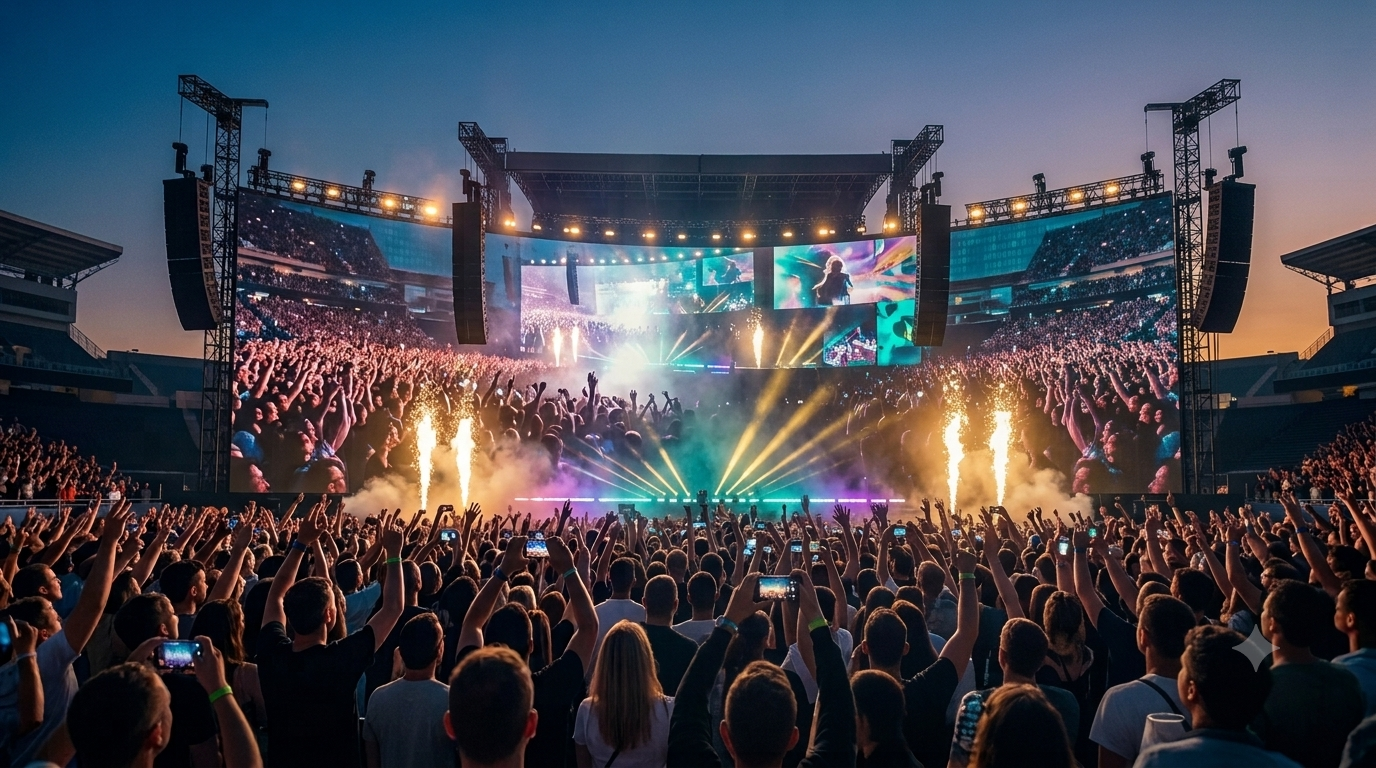
We live in an age of unprecedented digital convenience. With a few taps on a touchscreen, consumers can stream blockbuster films in 4K, attend virtual gaming conventions, scroll through endless algorithmic media, or listen to millions of songs on demand. Theoretically, the necessity of leaving home for entertainment should be at an all-time low.
Yet the exact opposite is happening. Stadiums are selling out at record speeds, music festival attendance is surging, and live sporting events continue to dominate global broadcast and ticket sales. Rather than replacing physical gatherings, digital saturation has triggered a cultural rebound—fueling a massive live entertainment comeback grounded in the human desire for shared, unscripted reality.
Table of Contents
The Economics of In-Person Connection
The global live entertainment market is projected to reach over $200 billion, demonstrating that audiences are shifting discretionary spending away from physical goods and toward experiences.
| Driver of Growth | Core Strategy & Impact |
| Superfan Economy | Premium VIP tiers, early-access passes, and custom experiential packages drive high-value revenue. |
| Cultural & Music Tourism | Fans actively travel across cities and borders to attend major stadium tours and flagship music festivals. |
| Diversified Monetization | Event organizers blend ticket sales with localized merchandise, high-end hospitality, and brand activations. |
his growth isn’t driven purely by ticket volume, but by a structural shift in how people value their time. In a world dominated by screen fatigue, a live concert, comedy show, or theatrical performance offers something an algorithm cannot: an irreducible, once-in-a-lifetime moment shared with thousands of others.
Why Audiences Are Returning to Physical Spaces
The resurgence of live events is rooted in a psychological need for community and authenticity. Modern consumers, particularly younger generations, are actively seeking ways to disconnect from isolated digital environments and reconnect with physical crowds.
The Influence of Gen Z and Millennials
Younger demographics are driving the majority of event travel and festival attendance:
-
Experiential Spending: Gen Z and Millennials consistently prioritize spending on real-world experiences, viewing concerts and sporting events as key identity markers.
-
Music & Sports Tourism: A significant majority of younger fans express a willingness to travel over 50 miles—and often internationally—to see their favorite artist or team perform live.
-
Social Proof & Community: While digital media provides instant entertainment, physical events offer tangible core memories and real-time social connection.
How Technology Enhances the Live Experience
Rather than acting as a competitor, technology has become an essential catalyst for the modern live entertainment comeback. Promoters and artists use digital tools not to replace the physical environment, but to elevate it.
-
High-Tech Production: Modern arenas and outdoor stages incorporate synchronized LED wristbands, immersive spatial audio, high-definition visual projection mapping, and augmented reality (AR) overlays that transform passive viewers into active participants.
-
Social Media Amplification: Short-form video clips on platforms like TikTok and Instagram do not deter attendance; instead, viral concert clips and fan reactions build massive FOMO (fear of missing out), accelerating ticket demand for upcoming tour dates.
-
Streamlined Event Logistics: Mobile ticketing, digital wallet integration, automated entry gates, and location-based stadium apps reduce long queues and improve on-site food, beverage, and merchandise access.
Industry Challenges: Pricing, Resale, and Accessibility
Despite soaring demand, the live event industry faces significant operational headwinds that test consumer patience:
-
Escalating Ticket Costs: Dynamic pricing models and venue service fees have pushed prime seats out of reach for many everyday fans, raising questions about long-term audience accessibility.
-
Secondary Market Speculation: Unregulated ticket scalping and automated resale bots continue to inflate secondary ticket market prices, draining consumer trust.
-
Production Overheads: Rising touring costs—ranging from equipment freight and fuel to venue staffing and insurance—put financial pressure on independent venues and emerging artists.
The Future of the Live Entertainment Comeback
Moving forward, the boundary between physical events and digital access will continue to blur without diminishing the value of being there in person. Hybrid event models—where physical stadium shows are paired with high-definition, interactive livestreams featuring custom camera angles or backstage commentary—allow organizers to reach global digital audiences without diluting the premium nature of the live ticket.
Ultimately, the sustained power of the live entertainment comeback proves that technology can distribute culture, but it cannot synthesize the electric atmosphere of a unified crowd. As digital noise grows louder, the simple, ancient act of gathering together to witness human performance will remain an irreplaceable part of the human experience.
-
- What Classic Sports Movies Teach Us About Real-World Athletic Resilience
-
-